


Megaesophagus is the most common cause for regurgitation in the dog.
Regurgitation results from the inability of the esophagus to contract properly
and propagate the food down to the stomach. As a result, the ingested food
and/or liquid remains in the esophagus, for anywhere from minutes to hours
to days. With the food not reaching the stomach to cause the sensation of
being full, the dog will continue to eat. As a result, the esophagus often
enlarges as it dilates greatly with food, hence the name of the disease. The
majority of cases of canine megaesophagus have no apparent cause, and
are therefore given the name, idiopathic megaesophagus. A minority of
cases are caused secondary to underyling disease, namely hypothyroidism
or mysthenia gravis, and are thus called acquired secondary
megaesophagus.
A very rare congenital disease, called a vascular ring anomaly is also
possible, but these are usually seen only in very young puppies. The typical
age of onset of canine megaesophagus is 7 - 15 years of age according to
many sources, but I have not uncommonly seen it in young dogs 1- 5 years
of age. I have heard of cases of canine idiopathic megaesophagus in
puppies, but have not personally seen any such cases. Clinical signs of
megaesophagus will vary depending on severity and may include:
regurgitation that may being minutes to several hours after eating or
drinking, excessive salivation, mild to moderate weight loss, coughing, or
wheezes. Some affected dogs present with pneumonia, secondary to
aspiration of regurgitated contents. This is perhaps the most dangerous
consequence of the disease.
The diagnostic work-up for megaesphagus begins with chest x-rays. The
x-rays may show the esophagus dilated with food and will determine whether
or not there is secondary aspiration pnuemonia. In some cases, the nature
of the ingested material does not allow for visualization of a dilated
esophagus. If the history fits mega-esophagus, but a dilated esophagus is
not seen on routine x-rays, then a contrast study can be performed, where
prior to the x-ray, a radio-opaque liquid is swallowed. Since the liquid will
show brightly on the x-ray, the integrity and shape of the esophagus will be
clearly visualized.
Once it is clearly established that a patient indeed has canine
megaesophagus, then the dog must be stablized, and any secondary
aspiration pneumonia treated. In addition, it is necessary to differentiate
between idiopathic and secondary acquired megaesophagus. A routine
profile should be run, constisting of a CBC, chemistry, and urinalysis. In
addition, a thyroid profile should be run (TSH, T4, free T4), as well as a test
for myesthenia gravis (acetyl choline receptor antibody test).
If the megaesophagus is ultimately acquired secondary, then the primary
disease should be treated. Please refer to our Diseases A-Z page provided
for more information regarding the treatment of hypothyroidism or
myesthenia gravis.
In cases where it is determined that the patient has idiopathic canine
megaesophagus, that is, megaesophagus of unknown origin, then husbandry
becomes the primary focus in managing the disease. Pro-gastrointestinal
motility drugs, such as cisapride and metoclopramide have been used to
attempt to incrcease esophageal tone, with little to no success in most
cases. I have personally had no success using these drugs to manage the
disease.
The main thrust of husbandry management of canine megaesophagus is
feeding and watering from elevated dishes. By elevating the food and water,
gravity helps to facilitate the passage of food from the esophagus to the
stomach. The dishes should be elevated to a height where the dog can just
barely reach the bowls, making certain that the dog really has to extend the
neck to eat or drink.
I
Regurgitation results from the inability of the esophagus to contract properly
and propagate the food down to the stomach. As a result, the ingested food
and/or liquid remains in the esophagus, for anywhere from minutes to hours
to days. With the food not reaching the stomach to cause the sensation of
being full, the dog will continue to eat. As a result, the esophagus often
enlarges as it dilates greatly with food, hence the name of the disease. The
majority of cases of canine megaesophagus have no apparent cause, and
are therefore given the name, idiopathic megaesophagus. A minority of
cases are caused secondary to underyling disease, namely hypothyroidism
or mysthenia gravis, and are thus called acquired secondary
megaesophagus.
A very rare congenital disease, called a vascular ring anomaly is also
possible, but these are usually seen only in very young puppies. The typical
age of onset of canine megaesophagus is 7 - 15 years of age according to
many sources, but I have not uncommonly seen it in young dogs 1- 5 years
of age. I have heard of cases of canine idiopathic megaesophagus in
puppies, but have not personally seen any such cases. Clinical signs of
megaesophagus will vary depending on severity and may include:
regurgitation that may being minutes to several hours after eating or
drinking, excessive salivation, mild to moderate weight loss, coughing, or
wheezes. Some affected dogs present with pneumonia, secondary to
aspiration of regurgitated contents. This is perhaps the most dangerous
consequence of the disease.
The diagnostic work-up for megaesphagus begins with chest x-rays. The
x-rays may show the esophagus dilated with food and will determine whether
or not there is secondary aspiration pnuemonia. In some cases, the nature
of the ingested material does not allow for visualization of a dilated
esophagus. If the history fits mega-esophagus, but a dilated esophagus is
not seen on routine x-rays, then a contrast study can be performed, where
prior to the x-ray, a radio-opaque liquid is swallowed. Since the liquid will
show brightly on the x-ray, the integrity and shape of the esophagus will be
clearly visualized.
Once it is clearly established that a patient indeed has canine
megaesophagus, then the dog must be stablized, and any secondary
aspiration pneumonia treated. In addition, it is necessary to differentiate
between idiopathic and secondary acquired megaesophagus. A routine
profile should be run, constisting of a CBC, chemistry, and urinalysis. In
addition, a thyroid profile should be run (TSH, T4, free T4), as well as a test
for myesthenia gravis (acetyl choline receptor antibody test).
If the megaesophagus is ultimately acquired secondary, then the primary
disease should be treated. Please refer to our Diseases A-Z page provided
for more information regarding the treatment of hypothyroidism or
myesthenia gravis.
In cases where it is determined that the patient has idiopathic canine
megaesophagus, that is, megaesophagus of unknown origin, then husbandry
becomes the primary focus in managing the disease. Pro-gastrointestinal
motility drugs, such as cisapride and metoclopramide have been used to
attempt to incrcease esophageal tone, with little to no success in most
cases. I have personally had no success using these drugs to manage the
disease.
The main thrust of husbandry management of canine megaesophagus is
feeding and watering from elevated dishes. By elevating the food and water,
gravity helps to facilitate the passage of food from the esophagus to the
stomach. The dishes should be elevated to a height where the dog can just
barely reach the bowls, making certain that the dog really has to extend the
neck to eat or drink.
I
Megaesophagus
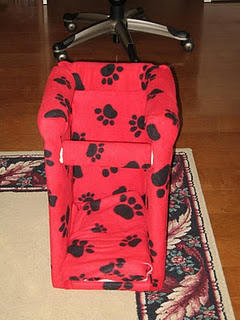
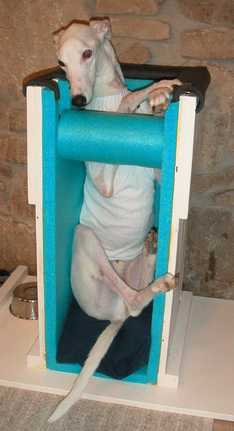
| The "Bailey Chair" Used for dogs who have megaesophagus. It allows the dogs to eat vertically allowing gravity to do it work for him. |
In severe cases of canine megaesophagus, even this type of feeding is not enough to prevent chronic regurgitation. For these patients,
one can try feeding and watering with dishes placed on top of a step ladder, high enough that the dog has to place the paws on the step
ladder in order to reach the food. This serves to orient, not just the neck, but the dog's entire body in a vertical position to eat and drink
from. If the case is so severe that even this does not work, one can obtain special blueprints to construct a special "megaesophagus
chair" that the dog can be trained to eat from. I do not have any such blueprints, but clients of mine have found them, among other very
helpful tips on a megaesophagus online support group.
As far as what type of food to feed, dry food is out of the question. A high calorie, high protien canned food (such as a goodcanned
puppy food) should be feed in very small amounts frequently throughtout the day. Some patients do better with the food pureed into a
liquid, while other do better with the food rolled into small meatballs. Water should also be offered in small amounts frequently. In
patients that have trouble with liquid water, you can try offering a crushed ice slush.
The prognosis for canine megaesophagus is guarded, with a great deal depending on severity of disease, the dedication and
cooperation of the affected patient's family, and how effective the dog's feeding and drinking habits can be regulated and monitored. As
stated before, the most dangerous complication of canine megaesophagus is secondary aspiration pneumonia.
By: Roger L. Welton, DVM
Founder, Web-DVM
President Maybeck Animal Hospital
Author Canine and Feline 101
Top Canine & Feline Topics
one can try feeding and watering with dishes placed on top of a step ladder, high enough that the dog has to place the paws on the step
ladder in order to reach the food. This serves to orient, not just the neck, but the dog's entire body in a vertical position to eat and drink
from. If the case is so severe that even this does not work, one can obtain special blueprints to construct a special "megaesophagus
chair" that the dog can be trained to eat from. I do not have any such blueprints, but clients of mine have found them, among other very
helpful tips on a megaesophagus online support group.
As far as what type of food to feed, dry food is out of the question. A high calorie, high protien canned food (such as a goodcanned
puppy food) should be feed in very small amounts frequently throughtout the day. Some patients do better with the food pureed into a
liquid, while other do better with the food rolled into small meatballs. Water should also be offered in small amounts frequently. In
patients that have trouble with liquid water, you can try offering a crushed ice slush.
The prognosis for canine megaesophagus is guarded, with a great deal depending on severity of disease, the dedication and
cooperation of the affected patient's family, and how effective the dog's feeding and drinking habits can be regulated and monitored. As
stated before, the most dangerous complication of canine megaesophagus is secondary aspiration pneumonia.
By: Roger L. Welton, DVM
Founder, Web-DVM
President Maybeck Animal Hospital
Author Canine and Feline 101
Top Canine & Feline Topics