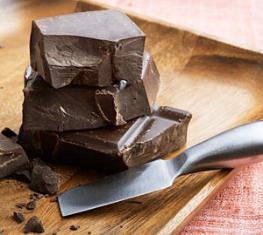
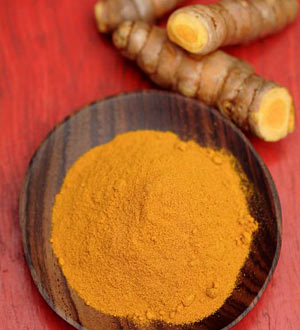
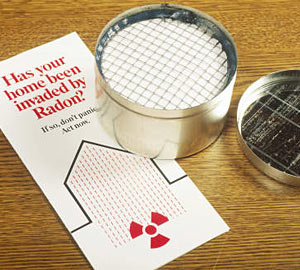
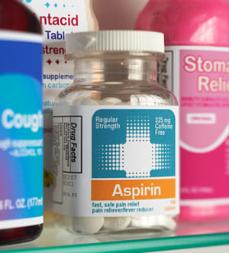
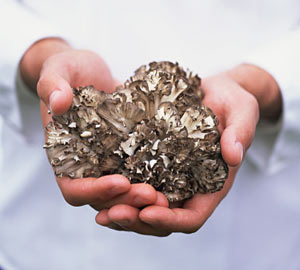
Stay weight wise Excess pounds boost cancer risk, a study in The Lancet shows. Build an exercise habit now to head off trouble: The American Cancer Society (ACS) recommends aiming for 30 minutes of activity five days a week. When you hit your 45th birthday, make sure you're also doing 45 minutes of strength training twice weekly to minimize metabolic slowdown. "Beginning in our mid- 40s, we lose up to a third of a pound of muscle a year and gain it back as fat, and fat burns fewer calories than muscle," says Miriam Nelson, Ph.D., director of Tufts University John Hancock Center for Physical Activity and Nutrition in Boston. Nibble a bit of chocolate As if you need an excuse! Researchers have discovered a compound in dark chocolate that fights fast-growing cancers such as colorectal cancer. "It requires the activity of an enzyme called kinase, which causes cancerous cells to die but leaves normal cells alone," says Richard Pestell, M.D., director of the Kimmel Cancer Center at Thomas Jefferson University in Philadelphia. The finding could even lead to adding chocolate to current cancer treatments. Practice peace Say ahhh! High levels of the stress hormone cortisol may inhibit a key gene from suppressing tumor growth, findings in the journal Genes, Chromosomes & Cancer suggest. Tame tension with this formula from the University of Pittsburgh Medical Center Healthy Lifestyle Program: Take deep belly breaths. You slow and elongate brain waves, bringing on calm. Watch your favorite comedy. Enjoying a good laugh activates the areas of the brain that govern humor, in turn suppressing the brain's stress regions. Adopt an uplifting mantra. Try "I love my life!" and repeat it when you're happy. You will train your mind to associate the phrase with being content. Then when you're on edge, chant your mantra and you'll immediately feel at ease. Bake, don't burn Grilling beef, poultry and fish until it's charred to a crisp can turn amino acids and other substances in the meat into heterocyclic amines (HCAs), compounds that have been linked to cancer. "HCAs are 10 times more potent than most other environmental carcinogens," says Kenneth Turteltaub, Ph.D., a toxicologist at Lawrence Livermore National Laboratory in California. Try these cookin'-good tips! Marinate meat before grilling. Soaking chicken breasts in a mixture of cider vinegar, olive oil, lemon juice and spices reduced HCA formation by 92 to 99 percent, notes a study published in Food and Chemical Toxicology. "Marinating creates a barrier between the hot surface and meat, enough to lower the temperature and prevent HCAs from forming," Turteltaub says. Keep the grill temp below 325 degrees, the point at which HCAs begin to form. Grill meat or fish in punctured aluminum foil to protect against flare-ups. When fat drips on the hot coals, it forms HCAs, plus other carcinogens called polycyclic aromatic hydrocarbons that rise with the smoke. Microwave beef burgers for one to three minutes before browning; doing so reduces HCA production by 95 percent, according to a study in Food and Chemical Toxicology. Prior to grilling, discard the juices, which contain the building blocks of HCAs. Flip burgers often—about once a minute. This action keeps meat juices from getting too hot and activating HCA formation. Avoid needless tests Those full-body computed tomography scans you sometimes see at the mall are bad news: CT scans deliver a dose of radiation 50 to 200 times that of a conventional X-ray. A study from Massachusetts General Hospital in Boston found that for every 1,000 patients screened, an average of 908 would have at least one false-positive result, requiring further testing. Stick to shopping when at the mall, and if your doc orders a nonemergency CT scan (say, to investigate headaches), ask if a radiation-free ultrasound or an MRI can be used instead, says Devra Davis, Ph.D., director of the Center for Environmental Oncology at the University of Pittsburgh Cancer Institute. Steal these secrets Cancer rates in some countries are significantly lower than in the United States, and many experts attribute this to the lifestyles of people in these areas. Adopt these disease-fighting behaviors from afar: Spice things up. In India, where breast cancer rates are about five times lower than in the United States, people cook with an abundance of cancer-fighting spices such as cumin, ginger and turmeric. Go for whole grains. Finland natives are known for eating loads of dark rye and other whole-grain breads, which likely contributes to their low colorectal cancer rates. Kick butts. West Africans smoke much less than Americans, which may in part explain why their rates of esophageal cancer are about 60 times lower than ours. Take a shot at HPV More women may soon benefit from Gardasil, a vaccine that protects against the two strains of human papillomavirus that cause 70 percent of cervical cancer cases. The FDA decided in March to give priority review to the potential use of the vaccine, currently approved for women ages 9 to 26, for women ages 27 to 45. "Older women have likely already been exposed to several HPV strains, but the vaccine could protect against other strains they haven't yet come in contact with," explains Debbie Saslow, Ph.D., director of breast and gynecological cancers for the ACS. Breathe easily Radon is a leading cause of lung cancer among nonsmokers. The odorless radio- active gas is linked to up to 22,000 cancer deaths annually, according to the National Cancer Institute (NCI). It is released during the decay of uranium, an element found in many soils, and can seep into your house. "When inhaled, radon can break down cell DNA and lead to cancer," Davis explains. To test your home, look for a do-it-yourself kit at a home- improvement store. Cut back on coffee The number of esophageal cancer cases has jumped 300 percent in the past 20 years, the U.S. Agency for Healthcare Research and Quality reports. A primary cause: chronic reflux, which bathes the throat in stomach acids that can erode tissue. To put out the flames, avoid top triggers like caffeine and alcohol. "They relax the sphincter muscle at the bottom of the esophagus, allowing stomach juices to splash up," says Yvonne Romero, M.D., assistant professor of medicine at the Mayo Clinic College of Medicine in Rochester, Minn. Ponder the Pill carefully Research on the link between birth control pills and cancer reveals the contraceptive can be a mixed blessing. On the one hand, women who took the Pill for 15 years cut their risk for ovarian and endometrial cancer by more than half, notes a study from the University of Oxford in England. Experts say that by suppressing ovulation, the Pill reduces the cell damage that can lead to tumors. On the other hand, Pill takers may have a slightly elevated risk for breast and cervical cancer. So what's the bottom line? "For most healthy women who don't smoke, the benefits of the Pill far exceed the risks," says Polly Marchbanks, Ph.D., an epidemiologist at the Centers for Disease Control in Atlanta. The cancer risks that do exist begin to decline once you stop taking oral contraceptives. Regardless, consult your gynecologist to learn what's best for you. Be sunscreen-savvy Melanoma rates among young women jumped 50 percent between 1980 and 2004, the Journal of Investigative Dermatology reports. Apply sunscreen properly: Put on the amount that would fill a shot glass 30 minutes before heading outdoors, then reapply every two hours or after swimming or major sweating. Also, look for broad-spectrum coverage and UVA-filtering ingredients such as Mexoryl, avobenzone and zinc oxide. Ask about daily aspirin It's not only for heart disease: One a day reduced estrogen-receptor-positive breast cancer risk by 16 percent, NCI research finds. "Aspirin may block cyclooxygenase, an enzyme that could disrupt cancer development, in part by reducing estrogen levels," says lead researcher Gretchen Gierach, Ph.D. More research is needed, though; long-term aspirin use can cause ulcers. Beware of false promises At least 25 companies have misleadingly marketed products containing ingredients like shark cartilage, exotic mushrooms and wild yam as cancer treatments or preventives, prompting the FDA to issue a warning this summer. One supplement, CancerGene, claimed to "help switch on all three genes that inhibit cancer." "These products aren't proven safe or effective," says FDA spokeswoman Rita Chappelle in Rockville, Md. |








Return to Top