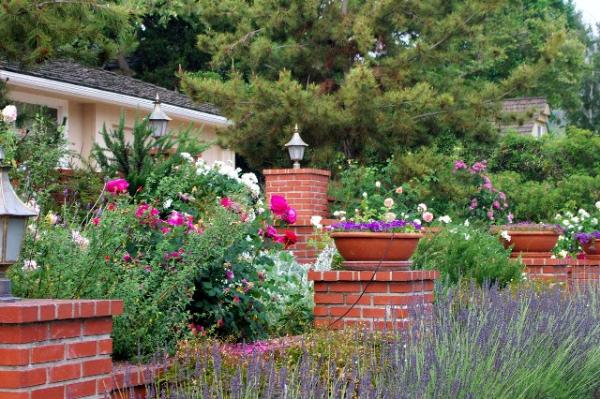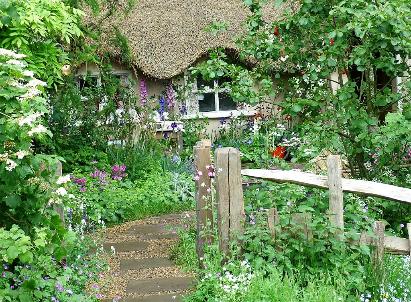
The cottage garden is a style of garden that
evokes many various images, from the quaint
garden around thatched cottages of Tudor
England, to the passalong gardens of rural
tenement houses in the Deep South.
So often the cottage garden tends to be
glorified, as if it stepped out of the pages of a
fairy tale or a Thomas Kinkade painting. In
reality, along with being beautiful, it is a highly
useful style of garden. It can be, and has been,
adapted to fit our modern life styles and its
appeal is truly global.
To begin to understand the concept of the
cottage garden it is best to start with a definition
of what the term literally means.
evokes many various images, from the quaint
garden around thatched cottages of Tudor
England, to the passalong gardens of rural
tenement houses in the Deep South.
So often the cottage garden tends to be
glorified, as if it stepped out of the pages of a
fairy tale or a Thomas Kinkade painting. In
reality, along with being beautiful, it is a highly
useful style of garden. It can be, and has been,
adapted to fit our modern life styles and its
appeal is truly global.
To begin to understand the concept of the
cottage garden it is best to start with a definition
of what the term literally means.
| Designing the Country Cottage Garden by Henry Flowers |
A "cottage" is defined as a "small, humble dwelling." A "garden" is defined as "a place for the cultivation of
flowers, vegetables, or small plants." Therefore, by strict definition, a "cottage garden" is "a place for the
cultivation of flowers, vegetables, or small plants at or around a small, humble dwelling."
flowers, vegetables, or small plants." Therefore, by strict definition, a "cottage garden" is "a place for the
cultivation of flowers, vegetables, or small plants at or around a small, humble dwelling."
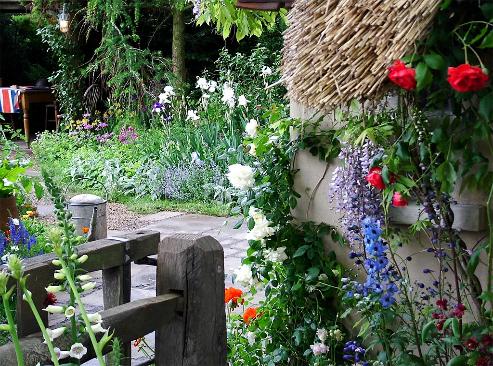
This definition is in some ways broad, in
that it would include all gardens around
all small, humble dwellings, whether
they be a few flowers beds around the
old oak tree, a rectangular vegetable
bed in the back, or an elaborate system
of parterres. Do these evoke the image
of a cottage garden that you had in
mind? They don't for me.
On the other hand, this definition may
seem a bit restrictive to some. I have
seen many gardens that are described
as being cottage gardens, yet there is
no cottage anywhere near, or the
dwelling is definitely neither small nor
humble.
I personally would say that these are
not then truly cottage gardens and
back my opinion with the argument that
one can not have a rose garden
without roses or a shade garden
without shade.
that it would include all gardens around
all small, humble dwellings, whether
they be a few flowers beds around the
old oak tree, a rectangular vegetable
bed in the back, or an elaborate system
of parterres. Do these evoke the image
of a cottage garden that you had in
mind? They don't for me.
On the other hand, this definition may
seem a bit restrictive to some. I have
seen many gardens that are described
as being cottage gardens, yet there is
no cottage anywhere near, or the
dwelling is definitely neither small nor
humble.
I personally would say that these are
not then truly cottage gardens and
back my opinion with the argument that
one can not have a rose garden
without roses or a shade garden
without shade.
Therefore, not having a cottage means that one can't have a true cottage garden. Perhaps these
"cottage-less" cottage gardens may more appropriately be described as "cottage-style gardens", "cottage
garden styled" or simply "cottagesque".
History
Now that the cottage garden has been somewhat strictly defined, it is time to turn attention to the qualities
that give the cottage garden its distinctiveness. Perhaps by looking at the history of how and why this garden
style developed, we can get a better grasp of the subject.
Since the dawn of civilization man has tended plants for his own use, whether in the wild or in cultivation. As
man began to stay in one place for a prolonged period of time, the cultivated garden began to take on more
importance, mainly for producing edible and medicinal plants. At the height of the Roman Empire,
ornamental plants, especially roses (also used in food and medicine), took on greater importance as wealth
and security increased and the burden of the production of food crops was spread to outlying territories.
After Rome's fall and the unsettled middle ages came to be, most gardening again was for subsistence
crops. The ravages of war and disease kept life unstable, but it was within the cloister of the monastery that
garden concepts and precious plants were preserved. Herbs were grown for medicine, food, and flavoring
and ornamentals were grown for decorating the chapel at festive occasions.
It is during the more peaceful time of the Tudor period in England (1485AD to 1603AD) that the cottage
garden truly began to develop. In this time of renaissance, global trade was flourishing and new plants from
the new world and the orient were arriving. These plants helped to spark a new interest in gardening among
the rich and not so fortunate alike. With the protection of the monastery or castle no longer necessary it was
safer now, and possible, to develop a garden beyond subsistence crops for the common home.
Because the dwellers of the small, humble cottage were not wealthy and had to be thrifty, it was natural that
they tended to grow the simple, hardy plants that we often call "cottage garden plants" or "passalong plants"
today. Plants such as foxgloves, hollyhocks, irises, and daisies undoubtedly evoke images of the quaint
English cottage garden. Plants of all types - annuals, perennials, vegetables, vines, small shrubs, and small
trees (especially fruiting) were grown.
The cottage garden reached its height of popularity in the Victorian era (1837 - 1904). A high level of trade
and wealth, much exploration of foreign lands, and a resulting plethora of new plants marked this time
period. Perhaps at no time before, or since, have plants been so truly appreciated by the broad public. It is
also at this time that well-known garden designers such as Gertrude Jekyll and Vita Sackville-West took the
humble cottage garden style and transferred it to the not-so-humble country estate gardens of the landed
gentry. With great wealth it was possible to carry out this labor-intensive style at its grandest level.
In our modern time the cottage garden has not lost its appeal, but is growing less common. Many reasons for
this exist. Here are a few:
A cottage garden is labor-intensive and people generally have less garden time.
Skilled garden labor is expensive and hard to find.
Houses are most often larger that a cottage and often not in a style suitable for the traditional cottage garden.
There is less of a need to grow one's own plants for food, medicine, and flavoring with increased reliance on
the grocery store.
Design
Despite the decline in popularity of this style of garden its appeal and practicality are still present for today's
avid gardener. To begin to understand what is involved in the well-designed country cottage garden it is best
to have an understanding of the principles of design.
PRINCIPLES OF DESIGN1
"The principles of design are not arbitrary; they are constant. They are the tools of all the arts, and no artist
can vary them until he has mastered them. A careful study and understanding of these principles of design
enables one to express his personality in art. It is through this mastery that distinction and individuality are
created and reflected in design. Distinction is that extra note of quality, taste, and originality for which all
persons strive."
Composition - the grouping of various parts to make the pattern (design).
Harmony (Unity) - the relationship between the various parts of a composition - this exists when the various
units of all parts form a concordant whole.
Focal Point - the point of convergence to which the eye is drawn because of the design - the "bull's eye".
Balance - a state that is achieved when the elements of a design are so composed that they give a feeling of
stability and security.
Mechanical Balance - balance achieved through the proper dispersal of physical materials (positive space).
Symmetrical - formal, man-made balance with perfect symmetry
Asymmetrical - informal, natural style without perfect symmetry
Visual Balance - achieved by the proper use of color and placement in sequence of related sizes of
materials in conjunction with structural balance.
Proportion - comparison of the relationship of the units of a composition to each other in size, quantity, and
setting (environment) - often referred to as scale.
Line - the visual path the eye follows to produce motion.
Texture - the physical characteristics of the materials in the design.
Rhythm - the apparent flow of line from the focal point; the repetition of materials giving force and movement
without monotony; the sequence of color harmony, and the graduation of the materials. This element
encompasses all the others - it gives life to the design and is the quality a great designer will achieve.
Color - a design element that is extremely important, yet often given too much attention, to the detriment of
the other elements. Color can evoke many emotions and is universal in its effects. It can be subtle and
soothing or it can create discord and put nerves on edge. As a result it can have great impact, positive or
negative, on the harmony and rhythm in a design. The study of the science of color can give a designer a
unique insight into how to manipulate a design in order to achieve a certain response or aid in figuring out
why harmony and rhythm are not achieved.
What Makes a Cottage Garden?
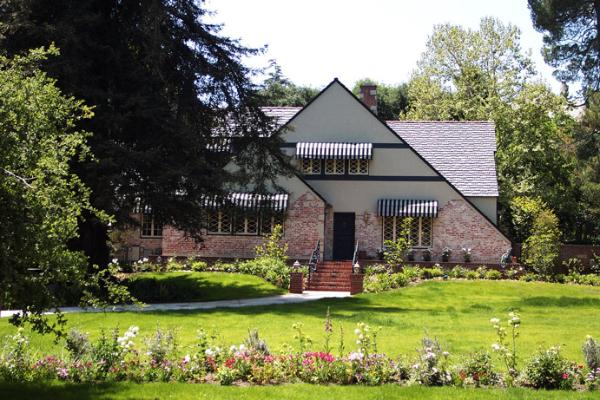
The Cottage - This is of course the main element that one must have in order to create a cottage garden - it
is the focal point of the design. Its style, size, materials, and history will all play a part in how the garden is
designed.
Structures - Structural elements in the cottage garden should relate to and accent the cottage itself.
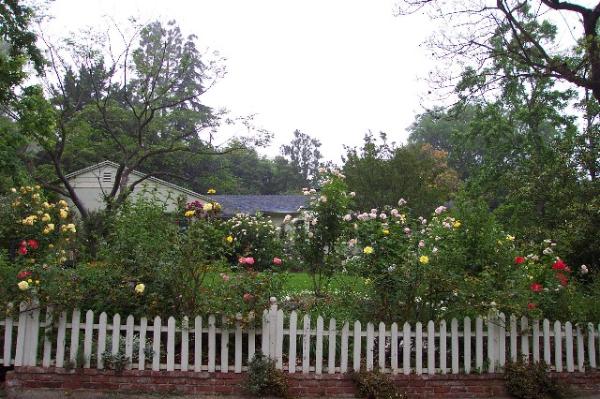
Enclosure - the fence, especially of wooden pickets, is often associated with the cottage garden. This is
most likely because of the necessity to protect plants in bygone days when farm animals were common and
roamed freely and horses were used for transportation. The fences and gates will create a defined space
that should be in proportion (scale) to the cottage and also of a style that complements it.
Arches, Trellises, and Arbors - Such structures can be used to accent doorways, gates, seating areas, and
other elements and are a great excuse, especially in combination with fencing, to give a vertical aspect to
the garden. Again, they should be of a style and material to complement the cottage. They should have a
purpose for being and should not float freely, which will detract from the focal point and overall harmony in the
design.
Walkways - Walkways need to be in proportion to the size of the cottage and garden. Cottage gardens are
most often small and intimate, so narrow walkways are acceptable. If you enjoy sharing your garden or if it is
open to the public, you would be better off making walkways wide enough for two people to walk abreast.
The wider path is more social and the narrower more personal. It is also best to take into consideration any
needs for maintenance (cart or wheelbarrow access) and possibly handicap accessibility. The size of the
walkway(s) will definitely influence how the space of your garden is perceived. Materials for walkways are
numerous and your choice should blend in with the materials and character of the other elements in the
garden.
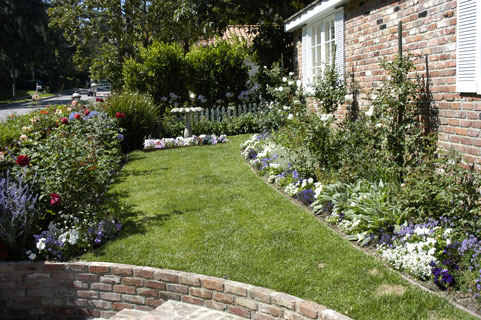
Beds - The size of planting beds will depend on the size of the cottage and any defined garden space
around it. I personally find that beds over 8 to 10 feet in depth are harder to maintain since you will have to
step over and around plants in the front to get to the back for maintenance. If beds can be approached from
all sides (not against a wall of fence), then they can be deeper. If it is necessary to make really deep beds
due to keeping proper scale, I find it best to plant lower maintenance materials toward the back and space
them well apart. Higher maintenance plants can then be placed toward the front and can be more tightly
spaced because of easier maintenance. Another option is to make smaller maintenance walkways into the
beds for access.
Cottage gardens generally accommodate a large variety of plant materials, so it is crucial that the beds be
well prepared with organic material before planting. The mixture of plant types (annuals, perennials, etc.)
means that it will not be easy to amend later. Compost can be tilled in between cycles oannuals or spread
around perennials, allowing nature to incorporate with the soil over time.
Mulch is also a great key to lowering maintenance and keeping plants and gardener happy. Good organic
gardening principles will be essential for keeping the cottage garden healthy and bountiful. Spraying harsh
chemicals should be avoided, as it will make it hard to use any vegetables or herbs from the garden.
Turf Grasses - Should areas of turf be included in the cottage garden? I believe that areas of turf only need
be included if the garden is of a size to accommodate it or if there is a need to have some space for children
or animals to play. The cottage garden is intensive and most often its spaces are given over to the cultivation
of as many plants as possible. One positive aspect of having an area of turf is that it tends to act like a
negative space, a space of calm and ease for the eye amid the very busy plantings of a cottage garden. This
can be used to benefit the overall design, giving plantings more visual power by clearing the foreground and
also giving one a place from which to stand back and take in a larger view. One way to incorporate turf into a
cottage garden would also be to use it in as the material for the walkways, as long as it can be maintained
and not overtrodden.
Hardscape Materials - Materials used to construct the frame, or skeleton, of the garden - the fences, arbors,
walkways, etc, should be of a style and material to complement the cottage itself. This will help to unite the
garden with the cottage to create unity and will further accent the cottage as the focal point.
Varying materials in the overall design will help to give interest, but as the cottage garden is innately very
busy texturally with its plants, I believe it is best to keep the number of different hardscape materials low. The
cottage garden highlights the wealth of plant material in our world and should be accented, not overwhelmed,
by the materials used to define its space.
Planting -
Grouping - The grouping of the same or like plant materials gives them more visual impact than if they are all
scattered in the design. A traditional rule of thumb is to use odd numbers such as three or five in order to
create better visual balance, but this need not be done if you are using large numbers of small plants, or if
the plants are likely to grow together to create one visual mass. "Onesies" should generally be avoided
unless they are larger specimen plants and are being used for balance or to create a focal point. The
"collector's garden" will often be filled with onesies and, though intrinsically a wonderful garden because of
its precious plant gems, it often lacks good overall design because design principles such as rhythm and
harmony not carried out.
Color - This design principle should be used to enhance the other principles of design. It should create
harmony and balance, can create or accent a focal point, and can also be used to effectively creatrhythm
and line in a design. Repetition of a single or multiple colors in a design can help to tie the often-discordant
planting style of a cottage garden together.
Texture - This can also be use to enhance the other design principles. Mixing plants of various textures can
add depth and rhythm while also enhancing unity.
Repetition - The repeating of a particular plant or group of plants throughout a design can also help to crate
harmony and add visual line to draw the eye through a design.
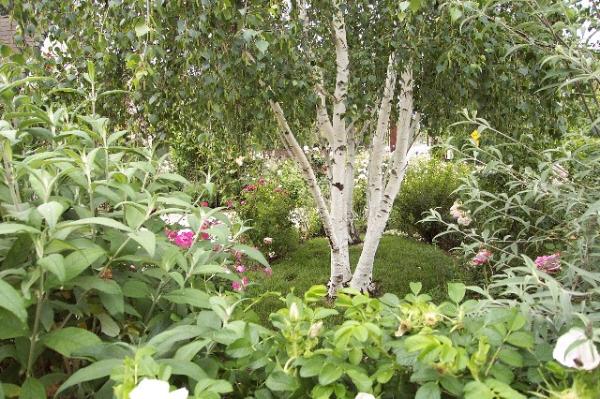
The Plants - The cottage garden should contain a diverse mixture of plants that displays the wealth of plants
in the world. There should be annuals, perennials, small shrubs (deciduous and evergreen), vines, and small
trees - especially fruiting ones. Including herbs and vegetables will make the mixture even more diverse and
useful.
Annuals will give the garden long-lasting color and seasonality.
Perennials will give the garden long-lasting stability, seasonality, and careful selection can give you color or
interest all year long or a great abundance all in one season.
Shrubs will give the garden a structural backbone. Evergreen shrubs can add stability to the ever-changing
plant palette of the cottage garden and deciduous shrubs can add even more color and seasonality.
Old-fashioned roses are truly some of the best shrubs for our area and are quintessential cottage garden
plants.
Small Trees, especially those that flower prolifically and produce fruit, add structural height and seasonality
to the garden. Trees such as crape myrtles, redbuds, mimosas, peaches, apples, and so on, are great trees
for the cottage garden since they usually don't create a lot of shade and can be thinned if they do.
Vines help to soften the hardscape and can add visual height and privacy. They can smooth out the harsh
lines of a fence or arbor and can add visual interest to a blank wall. They are the good excuse to add more
structures to the garden, which will add spatial definition, visual interest, and a greater sense of enclosure.
Now, as to the topic of which plants to use in the cottage garden - that is a whole other topic indeed. There
are many plants associated with the traditional cottage garden and many books that cover the subject.
Traditional cottage garden plants were ones that were easy to grow and performed well without a great deal
of prodding. They were passalong plants that could easily be shared or traded. If a plant is rare, difficult to
propagate, or hard to keep alive in your climate, it is really not a good candidate for inclusion in the
traditional cottage garden.
As I have previously mentioned, the cottage garden is an adaptable style and one can easily venture away
from the mold of the traditional. One could easily create a cottage garden of only native plants or use only the
new and exotic. This style is especially suited to the plantaholic that is continually searching out the rare and
unusual and would definitely lead to the creation of a non-traditional cottage garden.
As long as you have a cottage, follow the principles of design, and include some of the basic structural
elements used in the traditional cottage garden, you should be able to create a wonderful cottage garden
that is distinctly yours.
Happy Cottage Gardening!
"cottage-less" cottage gardens may more appropriately be described as "cottage-style gardens", "cottage
garden styled" or simply "cottagesque".
History
Now that the cottage garden has been somewhat strictly defined, it is time to turn attention to the qualities
that give the cottage garden its distinctiveness. Perhaps by looking at the history of how and why this garden
style developed, we can get a better grasp of the subject.
Since the dawn of civilization man has tended plants for his own use, whether in the wild or in cultivation. As
man began to stay in one place for a prolonged period of time, the cultivated garden began to take on more
importance, mainly for producing edible and medicinal plants. At the height of the Roman Empire,
ornamental plants, especially roses (also used in food and medicine), took on greater importance as wealth
and security increased and the burden of the production of food crops was spread to outlying territories.
After Rome's fall and the unsettled middle ages came to be, most gardening again was for subsistence
crops. The ravages of war and disease kept life unstable, but it was within the cloister of the monastery that
garden concepts and precious plants were preserved. Herbs were grown for medicine, food, and flavoring
and ornamentals were grown for decorating the chapel at festive occasions.
It is during the more peaceful time of the Tudor period in England (1485AD to 1603AD) that the cottage
garden truly began to develop. In this time of renaissance, global trade was flourishing and new plants from
the new world and the orient were arriving. These plants helped to spark a new interest in gardening among
the rich and not so fortunate alike. With the protection of the monastery or castle no longer necessary it was
safer now, and possible, to develop a garden beyond subsistence crops for the common home.
Because the dwellers of the small, humble cottage were not wealthy and had to be thrifty, it was natural that
they tended to grow the simple, hardy plants that we often call "cottage garden plants" or "passalong plants"
today. Plants such as foxgloves, hollyhocks, irises, and daisies undoubtedly evoke images of the quaint
English cottage garden. Plants of all types - annuals, perennials, vegetables, vines, small shrubs, and small
trees (especially fruiting) were grown.
The cottage garden reached its height of popularity in the Victorian era (1837 - 1904). A high level of trade
and wealth, much exploration of foreign lands, and a resulting plethora of new plants marked this time
period. Perhaps at no time before, or since, have plants been so truly appreciated by the broad public. It is
also at this time that well-known garden designers such as Gertrude Jekyll and Vita Sackville-West took the
humble cottage garden style and transferred it to the not-so-humble country estate gardens of the landed
gentry. With great wealth it was possible to carry out this labor-intensive style at its grandest level.
In our modern time the cottage garden has not lost its appeal, but is growing less common. Many reasons for
this exist. Here are a few:
A cottage garden is labor-intensive and people generally have less garden time.
Skilled garden labor is expensive and hard to find.
Houses are most often larger that a cottage and often not in a style suitable for the traditional cottage garden.
There is less of a need to grow one's own plants for food, medicine, and flavoring with increased reliance on
the grocery store.
Design
Despite the decline in popularity of this style of garden its appeal and practicality are still present for today's
avid gardener. To begin to understand what is involved in the well-designed country cottage garden it is best
to have an understanding of the principles of design.
PRINCIPLES OF DESIGN1
"The principles of design are not arbitrary; they are constant. They are the tools of all the arts, and no artist
can vary them until he has mastered them. A careful study and understanding of these principles of design
enables one to express his personality in art. It is through this mastery that distinction and individuality are
created and reflected in design. Distinction is that extra note of quality, taste, and originality for which all
persons strive."
Composition - the grouping of various parts to make the pattern (design).
Harmony (Unity) - the relationship between the various parts of a composition - this exists when the various
units of all parts form a concordant whole.
Focal Point - the point of convergence to which the eye is drawn because of the design - the "bull's eye".
Balance - a state that is achieved when the elements of a design are so composed that they give a feeling of
stability and security.
Mechanical Balance - balance achieved through the proper dispersal of physical materials (positive space).
Symmetrical - formal, man-made balance with perfect symmetry
Asymmetrical - informal, natural style without perfect symmetry
Visual Balance - achieved by the proper use of color and placement in sequence of related sizes of
materials in conjunction with structural balance.
Proportion - comparison of the relationship of the units of a composition to each other in size, quantity, and
setting (environment) - often referred to as scale.
Line - the visual path the eye follows to produce motion.
Texture - the physical characteristics of the materials in the design.
Rhythm - the apparent flow of line from the focal point; the repetition of materials giving force and movement
without monotony; the sequence of color harmony, and the graduation of the materials. This element
encompasses all the others - it gives life to the design and is the quality a great designer will achieve.
Color - a design element that is extremely important, yet often given too much attention, to the detriment of
the other elements. Color can evoke many emotions and is universal in its effects. It can be subtle and
soothing or it can create discord and put nerves on edge. As a result it can have great impact, positive or
negative, on the harmony and rhythm in a design. The study of the science of color can give a designer a
unique insight into how to manipulate a design in order to achieve a certain response or aid in figuring out
why harmony and rhythm are not achieved.
What Makes a Cottage Garden?
The Cottage - This is of course the main element that one must have in order to create a cottage garden - it
is the focal point of the design. Its style, size, materials, and history will all play a part in how the garden is
designed.
Structures - Structural elements in the cottage garden should relate to and accent the cottage itself.
Enclosure - the fence, especially of wooden pickets, is often associated with the cottage garden. This is
most likely because of the necessity to protect plants in bygone days when farm animals were common and
roamed freely and horses were used for transportation. The fences and gates will create a defined space
that should be in proportion (scale) to the cottage and also of a style that complements it.
Arches, Trellises, and Arbors - Such structures can be used to accent doorways, gates, seating areas, and
other elements and are a great excuse, especially in combination with fencing, to give a vertical aspect to
the garden. Again, they should be of a style and material to complement the cottage. They should have a
purpose for being and should not float freely, which will detract from the focal point and overall harmony in the
design.
Walkways - Walkways need to be in proportion to the size of the cottage and garden. Cottage gardens are
most often small and intimate, so narrow walkways are acceptable. If you enjoy sharing your garden or if it is
open to the public, you would be better off making walkways wide enough for two people to walk abreast.
The wider path is more social and the narrower more personal. It is also best to take into consideration any
needs for maintenance (cart or wheelbarrow access) and possibly handicap accessibility. The size of the
walkway(s) will definitely influence how the space of your garden is perceived. Materials for walkways are
numerous and your choice should blend in with the materials and character of the other elements in the
garden.
Beds - The size of planting beds will depend on the size of the cottage and any defined garden space
around it. I personally find that beds over 8 to 10 feet in depth are harder to maintain since you will have to
step over and around plants in the front to get to the back for maintenance. If beds can be approached from
all sides (not against a wall of fence), then they can be deeper. If it is necessary to make really deep beds
due to keeping proper scale, I find it best to plant lower maintenance materials toward the back and space
them well apart. Higher maintenance plants can then be placed toward the front and can be more tightly
spaced because of easier maintenance. Another option is to make smaller maintenance walkways into the
beds for access.
Cottage gardens generally accommodate a large variety of plant materials, so it is crucial that the beds be
well prepared with organic material before planting. The mixture of plant types (annuals, perennials, etc.)
means that it will not be easy to amend later. Compost can be tilled in between cycles oannuals or spread
around perennials, allowing nature to incorporate with the soil over time.
Mulch is also a great key to lowering maintenance and keeping plants and gardener happy. Good organic
gardening principles will be essential for keeping the cottage garden healthy and bountiful. Spraying harsh
chemicals should be avoided, as it will make it hard to use any vegetables or herbs from the garden.
Turf Grasses - Should areas of turf be included in the cottage garden? I believe that areas of turf only need
be included if the garden is of a size to accommodate it or if there is a need to have some space for children
or animals to play. The cottage garden is intensive and most often its spaces are given over to the cultivation
of as many plants as possible. One positive aspect of having an area of turf is that it tends to act like a
negative space, a space of calm and ease for the eye amid the very busy plantings of a cottage garden. This
can be used to benefit the overall design, giving plantings more visual power by clearing the foreground and
also giving one a place from which to stand back and take in a larger view. One way to incorporate turf into a
cottage garden would also be to use it in as the material for the walkways, as long as it can be maintained
and not overtrodden.
Hardscape Materials - Materials used to construct the frame, or skeleton, of the garden - the fences, arbors,
walkways, etc, should be of a style and material to complement the cottage itself. This will help to unite the
garden with the cottage to create unity and will further accent the cottage as the focal point.
Varying materials in the overall design will help to give interest, but as the cottage garden is innately very
busy texturally with its plants, I believe it is best to keep the number of different hardscape materials low. The
cottage garden highlights the wealth of plant material in our world and should be accented, not overwhelmed,
by the materials used to define its space.
Planting -
Grouping - The grouping of the same or like plant materials gives them more visual impact than if they are all
scattered in the design. A traditional rule of thumb is to use odd numbers such as three or five in order to
create better visual balance, but this need not be done if you are using large numbers of small plants, or if
the plants are likely to grow together to create one visual mass. "Onesies" should generally be avoided
unless they are larger specimen plants and are being used for balance or to create a focal point. The
"collector's garden" will often be filled with onesies and, though intrinsically a wonderful garden because of
its precious plant gems, it often lacks good overall design because design principles such as rhythm and
harmony not carried out.
Color - This design principle should be used to enhance the other principles of design. It should create
harmony and balance, can create or accent a focal point, and can also be used to effectively creatrhythm
and line in a design. Repetition of a single or multiple colors in a design can help to tie the often-discordant
planting style of a cottage garden together.
Texture - This can also be use to enhance the other design principles. Mixing plants of various textures can
add depth and rhythm while also enhancing unity.
Repetition - The repeating of a particular plant or group of plants throughout a design can also help to crate
harmony and add visual line to draw the eye through a design.
The Plants - The cottage garden should contain a diverse mixture of plants that displays the wealth of plants
in the world. There should be annuals, perennials, small shrubs (deciduous and evergreen), vines, and small
trees - especially fruiting ones. Including herbs and vegetables will make the mixture even more diverse and
useful.
Annuals will give the garden long-lasting color and seasonality.
Perennials will give the garden long-lasting stability, seasonality, and careful selection can give you color or
interest all year long or a great abundance all in one season.
Shrubs will give the garden a structural backbone. Evergreen shrubs can add stability to the ever-changing
plant palette of the cottage garden and deciduous shrubs can add even more color and seasonality.
Old-fashioned roses are truly some of the best shrubs for our area and are quintessential cottage garden
plants.
Small Trees, especially those that flower prolifically and produce fruit, add structural height and seasonality
to the garden. Trees such as crape myrtles, redbuds, mimosas, peaches, apples, and so on, are great trees
for the cottage garden since they usually don't create a lot of shade and can be thinned if they do.
Vines help to soften the hardscape and can add visual height and privacy. They can smooth out the harsh
lines of a fence or arbor and can add visual interest to a blank wall. They are the good excuse to add more
structures to the garden, which will add spatial definition, visual interest, and a greater sense of enclosure.
Now, as to the topic of which plants to use in the cottage garden - that is a whole other topic indeed. There
are many plants associated with the traditional cottage garden and many books that cover the subject.
Traditional cottage garden plants were ones that were easy to grow and performed well without a great deal
of prodding. They were passalong plants that could easily be shared or traded. If a plant is rare, difficult to
propagate, or hard to keep alive in your climate, it is really not a good candidate for inclusion in the
traditional cottage garden.
As I have previously mentioned, the cottage garden is an adaptable style and one can easily venture away
from the mold of the traditional. One could easily create a cottage garden of only native plants or use only the
new and exotic. This style is especially suited to the plantaholic that is continually searching out the rare and
unusual and would definitely lead to the creation of a non-traditional cottage garden.
As long as you have a cottage, follow the principles of design, and include some of the basic structural
elements used in the traditional cottage garden, you should be able to create a wonderful cottage garden
that is distinctly yours.
Happy Cottage Gardening!