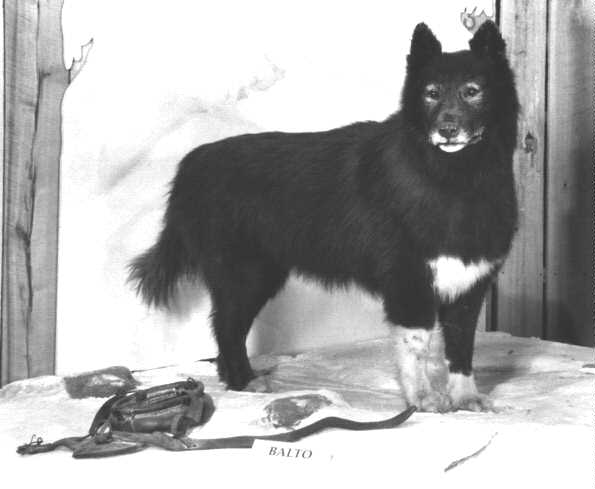
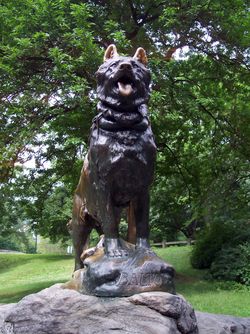
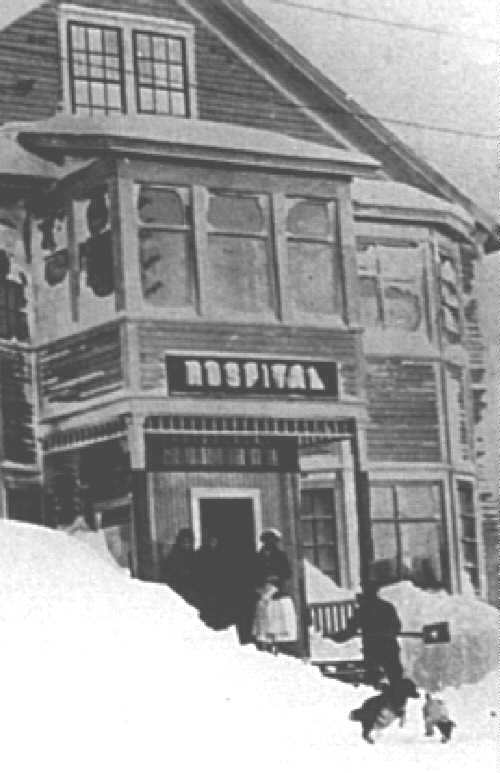
Balto (1922 – March 14, 1933) was a sled dog who led his team on the final leg of the 1925 serum run to Nome, in which diphtheria antitoxin was transported from Anchorage, Alaska to Nome by dog sled to combat an outbreak of the disease. The run is commemorated by the annual Iditarod dogsled race. In January 1925, doctors realized that a potentially deadly diphtheria epidemic was poised to sweep through Nome's young people. The only serum that could stop the outbreak was in Anchorage, nearly a thousand miles (1,600 km) away. The only two aircraft that could quickly deliver the medicine had been dismantled for the winter; after considering alternatives, officials decided to move the medicine by sled dog. The serum was transported by train from Anchorage to Nenana, where the first musher embarked as part of a relay aimed at delivering the needed serum to Nome. More than 20 mushers took part, facing a blizzard with −53 °F temperatures and strong winds. News coverage of the race was worldwide. On February 2, 1925, the Norwegian Gunnar Kaasen drove his team, led by the husky Balto (named after Samuel Balto), into Nome. The longest and most hazardous stretch of the run was actually covered by another Norwegian, Leonhard Seppala and his dog team, led by Togo. They came from Nome towards the end of the run and picked up the serum from musher Henry Ivanoff. The serum was later passed to Kaasen. Kaasen did not consider Balto a particularly good lead dog, but Balto proved himself on the Iditarod trail, saving his team from certain death in the Topkok River. Balto was also able to stay on the trail in near whiteout conditions in which Kaasen admitted he could barely see his hand in front of his face. After the mission's success, Balto and Kaasen became celebrities. A statue of the husky by Frederick Roth was erected in New York City's Central Park in 1926. Balto and his companions were bought by vaudeville sideshow operators and toured the country for the next two years. Hearing of this, Cleveland, Ohio residents raised $2,000 to purchase the seven dogs and gave them a permanent home at the Cleveland Zoo in March 1927. They received a hero's welcome, attracting more than 15,000 visitors on their first day in the zoo. Balto died in Cleveland on March 14, 1933, at 11 years old; his body was stuffed and placed on display in the Cleveland Museum of Natural History. In 1995, an animation film based on Balto was made and is still about today. In 2002 Balto 2 was made, although it wasn't true, it still captured our hearts. Balto 3 was made a few years later. Us Balto fans pray that we will see a Balto 4 soon and that Balto shan't be forgotten. |
| The Story Of Balto |